Day 22-Building Bridges Redux
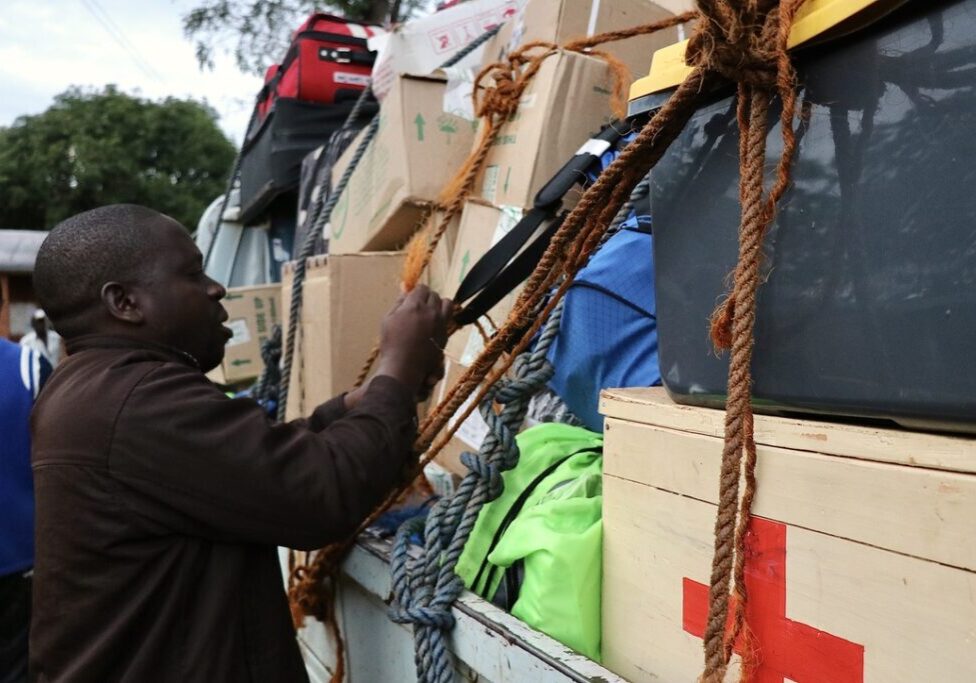
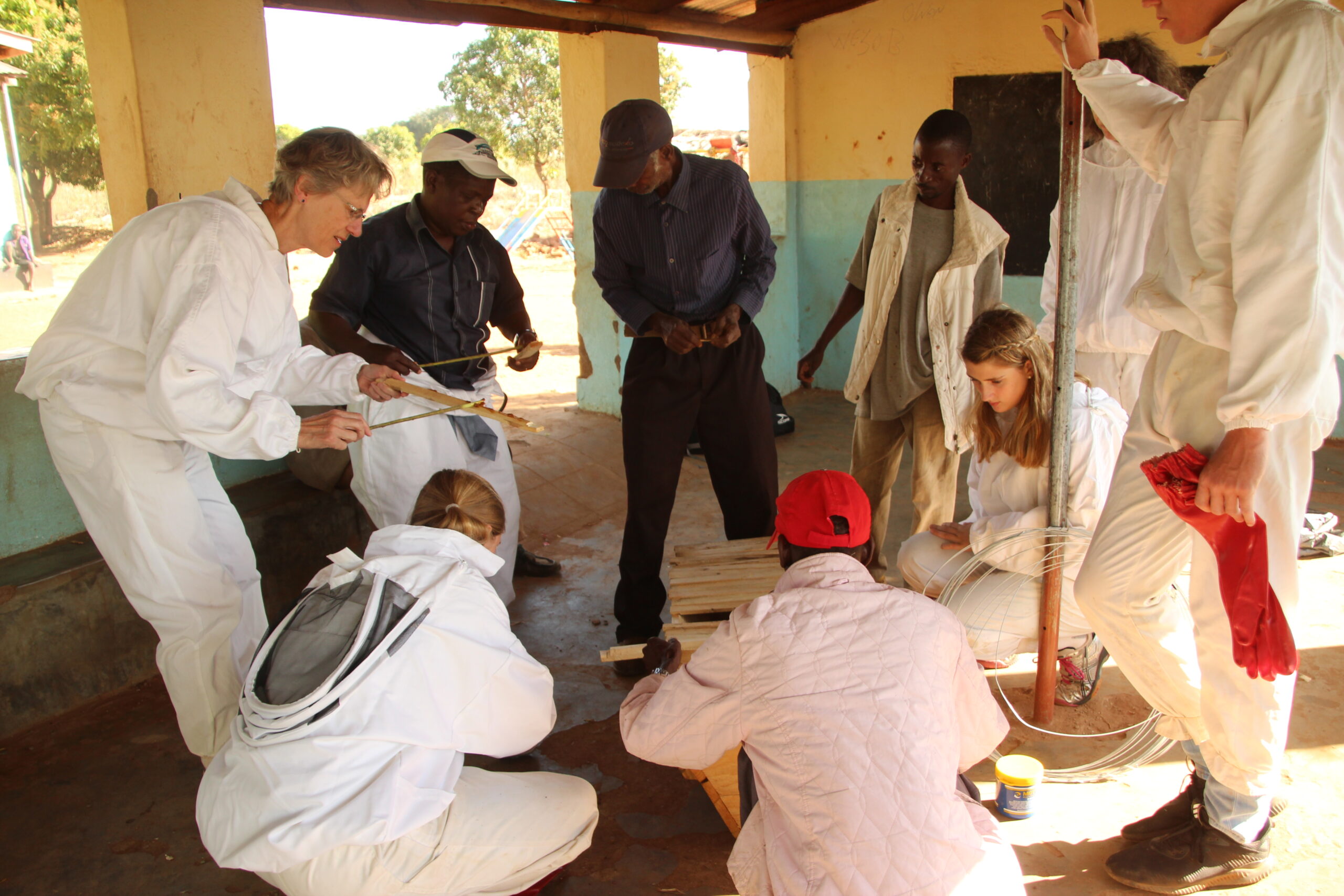 Tory, Terra, Trudy, Sandra and John Anderson woke up early on Saturday morning as they accompanied Frank on a trip out to Mpoola village, the heart of VIP’s beekeeping initiative. VIP currently has 16 hives in Mpoola Village and when the beekeepers harvested in June, these hives produced enough for 25 bottles of honey. The honey was then sold to generate income for the beekeepers to spend on school fees, home improvements and further investments in their business. The Mpoola beekeeping project has become so successful that farmers in the nearby villages have expressed interest in becoming beekeepers as well. In June, Frank conducted a three day training session for two new groups from Ngomano and Liti villages so that they could learn how to care for hives and begin to enjoy all of the benefits that a healthy bee population can bless a community with. One of the best things about the June training session was that it was not just led by Frank and government officials. The experienced members of already existing beekeeping clubs volunteered their time so that they could help train other farmers as well. This is something that I noticed about VIP projects from the very start. People who have benefitted from VIP training and investment, do not try to jealously guard their position and hoard their knowledge, they become ambassadors for VIP, spreading knowledge and advice and even working alongside their countrymen, even if they don’t stand to gain anything themselves. This sense of community and generosity by ordinary Malawians marked every project that I worked on.
While Frank and the Bee Team were hard at work in Mpoola, Enoch, Jordan and Gayle made their way to the all-day choir competition that Enoch would be leading. Enoch and a group of judges would be listening to some of the best choirs from the villages around Zomba, and by the end they would pick out the 16 best individual performers to form a select choir. As for the rest of us, we were heading back to work on the Sakata Bridge. The first friendship team had spent a long day at the bridge, gathering heavy stones and river sand for constructing the cement and stone foundation of the new bridge. Today we would be helping to carry away the timbers of the old bridge and begin building a supporting pillar. Carrying away the timbers was no easy task. Over 20 feet long, the timbers must have weighed close to a thousand pounds. It was important that we worked together to move them not only to get the job done quickly, but to avoid injuries. Years ago a group of villagers had been moving similar sized logs, and one man had his thumb crushed when it was unexpectedly dropped. We quickly found that we were not only facing the dangers of the bridge, but of Mother Nature as well.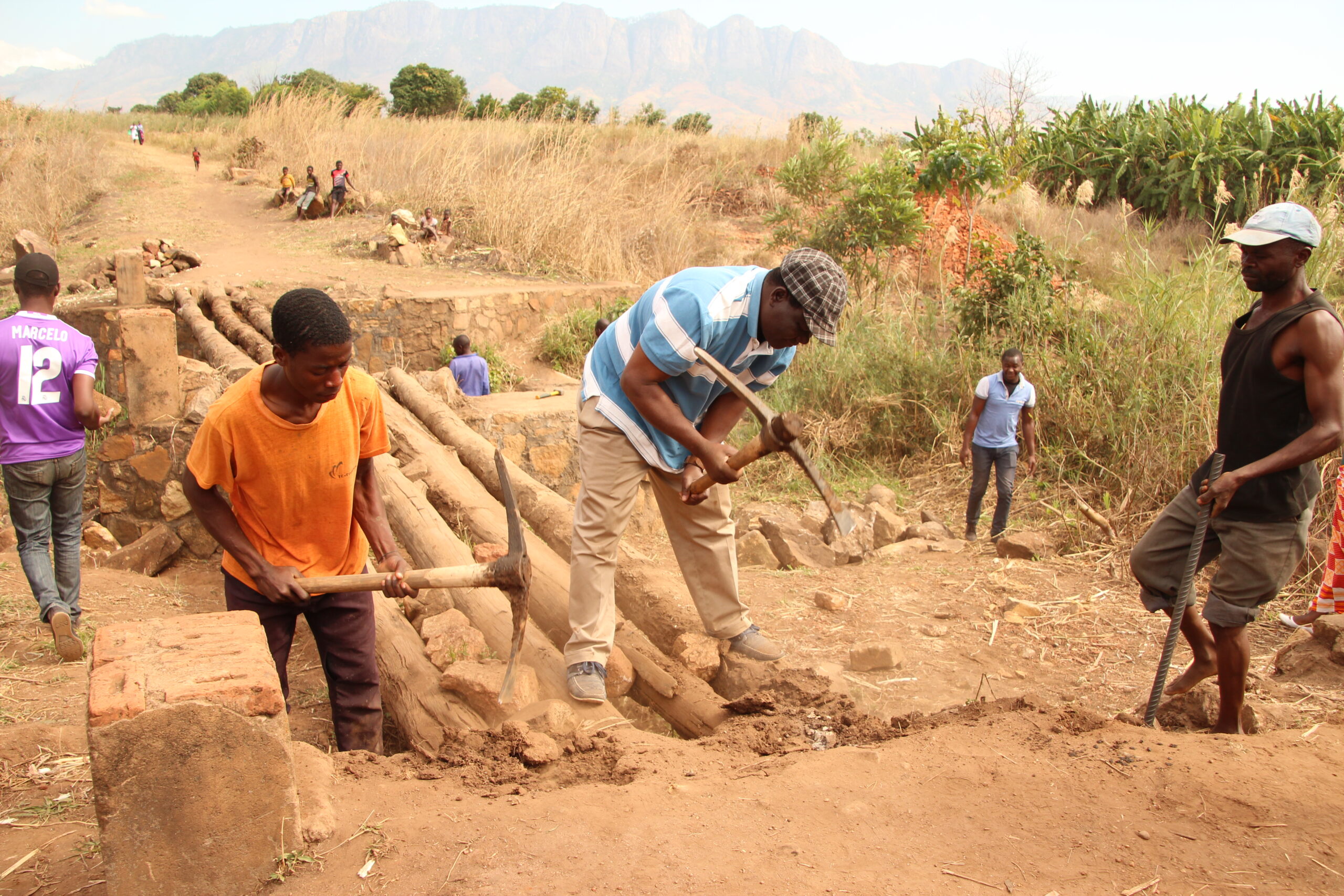 As we began to loosen the soil that had been packed around the timbers of the bridge since its construction we began to unearth all manner of dangerous creatures. The first animal we noticed was a particularly large centipede that crawled out of its burrow as the pickaxes began to crash through the soil around it. Centipede venom, particularly from larger species like this, can be extremely painful, though not generally fatal to humans.
A few minutes later as our team of about a dozen began to lift the first log out of its groove Liz, who was standing on the other side of the bridge taking pictures called out “snake, snake SNAKE!” We dropped the log back on to concrete support (I would like to say in an organized and safe manner, but as the person closest to the snake, I can’t actually be certain of that) and took a few steps back. Or at least most of us did, after catching sight of the black snake uncoiling from its lair about a foot or so from my arm, I ran to the other side of the bridge before turning back to check again. While we couldn’t be sure what kind of snake it was, Mwalabu tentatively identified it as a juvenile black mamba.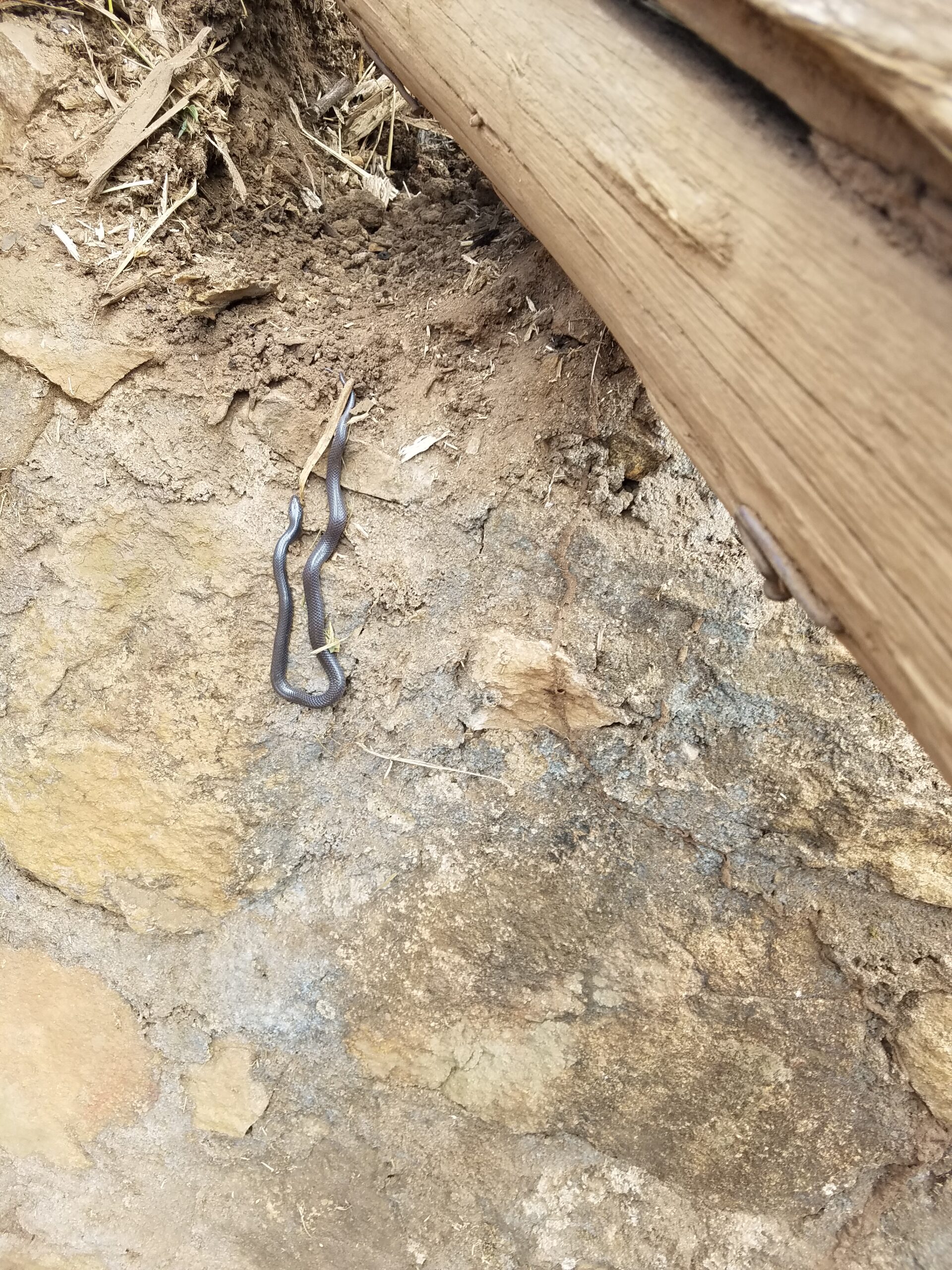 After removing the two potentially venomous animals, for the safety of everyone involved, we were able to get back to work on the bridge, this time without incident. While we had been moving the timbers, a group of Malawians were digging a large trench in the mud near the river for the bridge’s supporting column. It was really striking to see two chiefs down in the trench, shoveling out mud and getting steadily dirtier, all for the benefit of their people.
Soon the trench was finished and we could begin filling it with the cement and stones that the first team had gathered at the site over a week ago. We formed a human chain and began passing down buckets of concrete and river sand which would form the base of the new pillar. After VIP’s contractor, “Mr. Number One,” the lead foreman on the Sakata Bridge project, determined that enough cement and sand had been added, we began to pass down armfuls of stones to add to the cement. We stood in the line together for over an hour passing down the stones, sand and cement, sometimes laughing and joking with another, sometimes breaking out in a song to make the work go easier, sometimes in silence. But working on that bridge was one of my favorite activities of the entire trip. I spoke to my roommate Hastings about it later that day, and we had the same thoughts. As we worked we both felt like members of a team, a team without position or class, where no one was elevated above or sunken below anyone else. Regardless of whether we were rich or poor, black or white, a chief or villager, a pastor or layperson, a physicist or a farmer we all were doing the same thing, working together as a single unit for the benefit of hundreds. It was a powerful experience and when we had finished work for the day, we left our Malawian companions with handshakes and hugs before heading off to watch the end of the choir competition.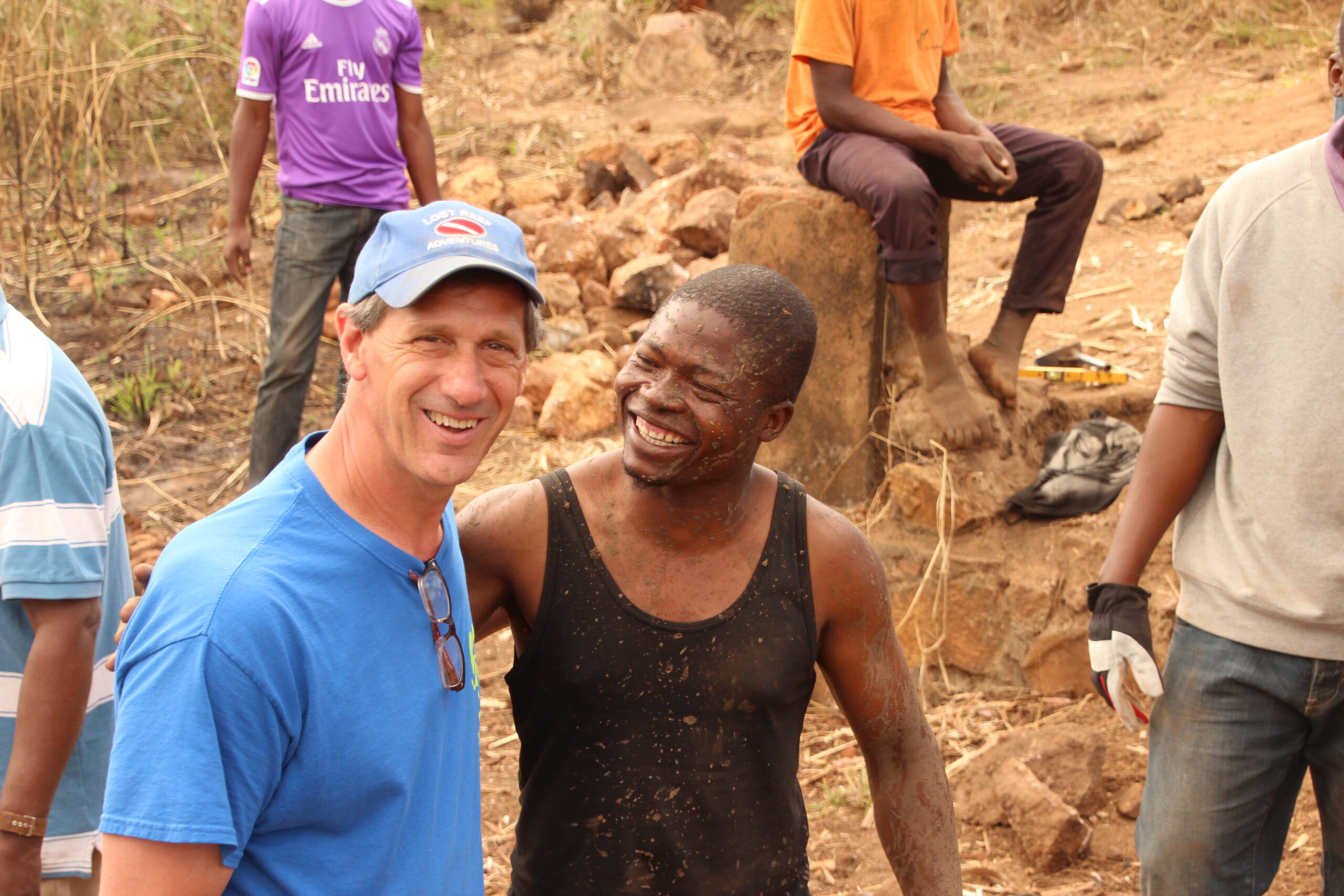
When we arrived at the church where the competition was being held, we were ushered to seats immediately behind Enoch and the other three judges, Jordan Heinzel-Nelson, Isaac Mwalabu and Mada, VIP’s new health and nutrition officer. When I asked Jordan how the previous choirs had been, she replied that they had been excellent, with one children’s choir even moving her to tears. As another choir began to perform on the raised platform at the front of the church I saw that Enoch, a professional musician and record producer, was in his element. As the choirs sang he would listen to them from all different vantage points, even making his way onto the stage softly clapping and dancing along as he began to pick out the different voices. Eventually he and his fellow judges narrowed all the choirs down to the 16 who they felt had the strongest, most interesting voices.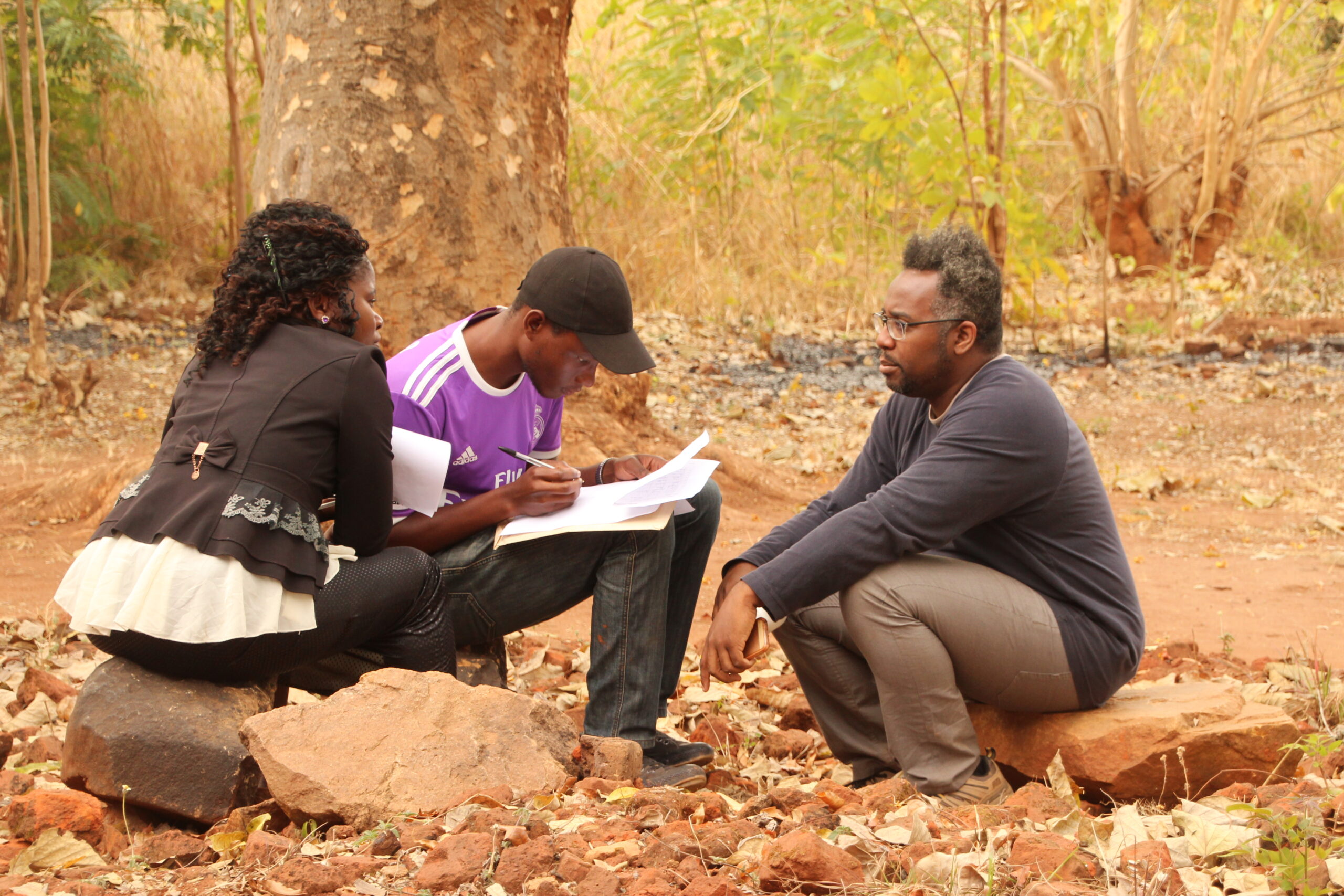 These 16, representing all ages and genders, from a little girl of 10 to a host of elders 7 times her age, would form a new select choir. Enoch is not yet sure what this choir will become, but he knows that he wants to come back to Malawi and continue to work with them. His dream, still far off, is to find a way to get some of them over to the U.S., where they can perform in front of some of our church partners, allowing them to experience the beautiful and unique music that left Enoch literally speechless when asked later that day to explain his emotions on listening to the various choirs. Malawi does not have the same reputation for music that some of the larger countries on the African continent, like Nigeria and the Congo do, yet. But with the recent success of the Zomba Prison Project, a collection of prisoners and guards at the Zomba Prison whose first album was nominated for a Grammy, and the power of local Malawian choirs I am sure that is going to change soon.
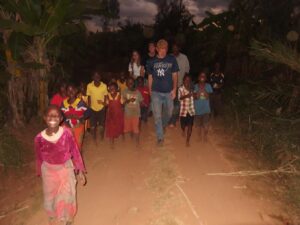
After the choir competition was over I drove back to the farm in the back of Joe’s pickup truck with Hastings, Tory, Jordan, John Anderson and some of our translators, while John Hurlbert rode in the cab with Joe. Joe dropped us off at the base of the dirt road that leads up to the farm and we jumped out, waving goodbye to everyone and telling them we would see them tomorrow. We made our way up the hill joking and tossing around a ball, and we were soon joined by a throng of local kids who wanted to join in the fun. Everywhere you go in Malawi you will see crowds and crowds of unaccompanied children. Part of the reason is that Malawi is a very hierarchical society in terms of age, and most adults just don’t spend a lot of time with kids. Another reason is the HIV epidemic that has ravaged entire generations in Malawi. There are over a million orphans in the small country of 17 million people, many of whom have been forced to watch as one or both parents have slowly succumbed to the dreaded disease. So whenever we have the opportunity, our friendship teams love to spend time with the kids, playing with them and giving them attention. What should have been a twenty minute walk turned into an hour, as we played catch, raced, tickled, played leap frog and walked with the kids up the hill. As darkness closed in around us, we hugged the kids goodbye and waved as they passed out of our vision into the veil of the night. I smiled as I watched them go, reflecting that it’s the little unexpected moments like that, when you walk through towns and villages, and open yourself up to the opportunity to connect with people you would never otherwise meet, that are sometimes the most rewarding experiences.