The Demonstration Farm Is Alive — and Changing Lives in Malawi — By Rich Daesener
Rich Daesener, Director of Strategic Partnerships, recently traveled to Malawi, Africa. Read about the incredible growth he saw since his last visit 2 years ago.
I just returned from my second visit to Malawi, my last trip was in 2023, and even though only two years have passed, I am truly amazed by the progress VIP is making. So many programs and initiatives are now up and running, thanks to our incredible staff who continue to walk alongside our friends in the remote villages, helping them move from scarcity toward sustainability.
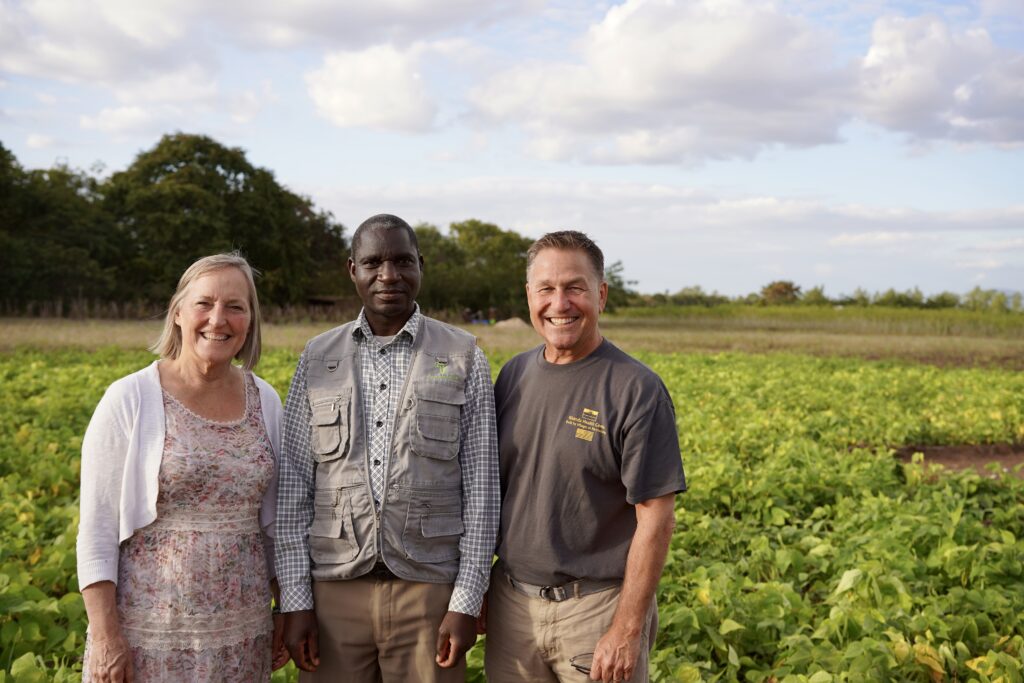
One moment that really struck me was visiting the demonstration farm. When I was last there, it was little more than a dream — just a gate, a fence, a shipping container, and a vision of what could be. This time, as I stepped out of the Land Cruiser (there’s always room for one more!), I was overcome with emotion. The demonstration farm was alive!
The warehouse was fully constructed and stocked with bags of grain. The farm manager’s house and the guest house were both complete. Construction was underway on the classroom and cleanroom. And the fields? They were full of life — tomatoes, beans, cassava, maize, onions — were thriving in the fields.
At the heart of this transformation is David Forpenz, the farm manager. His passion, humility, and deep knowledge were evident as he guided us around the farm. His pride in the land and the work being done was palpable.
While we were walking through a newly planted maize field, David explained that he’s currently testing six different kinds of fertilizer. With fertilizer prices on the rise, he wants to give farmers options, to show them what works best in real conditions. One of the fertilizers he’s testing is “biochar,” made by composting and mixing in ground-up charcoal from burned maize cobs left over from harvest.
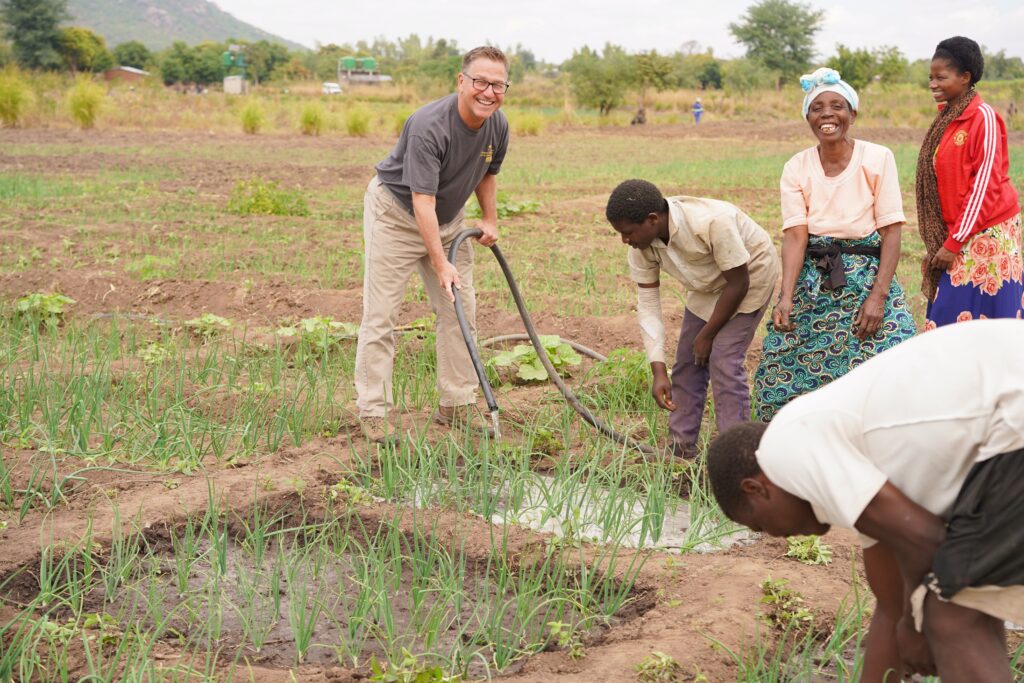
Previously, David experimented with different planting distances for maize. While the government recommends spacing plants 75 cm apart, he also tested 40, 50, and 60 cm. After two rounds, he found that the 50 cm spacing nearly doubled the yield, with no drop-off in results from the tighter spacing. This kind of discovery is a game-changer for our farmers, especially those with limited land. It’s just one of the many ways the demonstration farm is helping improve food security.
David is also focused on long-term sustainability. His goal is for the farm to be self-sustaining. He’s strategically planting different cash crops throughout the year, maximizing their value while ensuring the farm doesn’t compete with local farmers.
To see the dream of the demonstration farm coming to life was deeply moving. The demonstration farm is no longer a dream. It’s happening. And it’s only possible because of the shared commitment of the VIP family who have walked alongside our brothers and sisters in Malawi. Thank you for making this vision come alive!
Support our ongoing partnership in Malawi and help make sustainable change a reality, today!